
اليكم الان Analysis: Tehran Closes the Strait After Washington Breaches Understandings and Responds to American Aggression والان إلى التفاصيل من المصدر الخبر اليمني
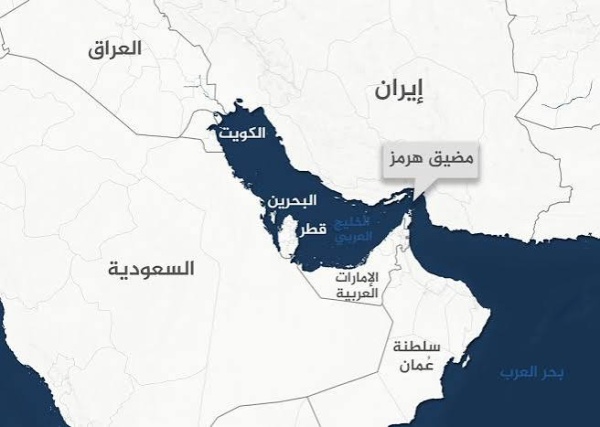
Exclusive – Al-Khabar Al-Yemeni:The confrontation between Iran and the United States entered a new turning point after the Revolutionary Guard announced the complete closure of the Strait of Hormuz, linking its reopening to the cessation of American interventions and military moves in the region. The announcement was made in a decisive tone, leaving little room for interpretation: no ship passage until further notice, and no recognition of any navigational corridor operated outside coordination with Tehran.Hours after the announcement, the United States launched aggressive strikes on sites inside Iran, quickly moving the crisis from a dispute over navigation arrangements to an open round of bombardment and mutual responses.Washington considered its operations a response to the closure of the strait and the targeting of ships that attempted to pass through the southern route, while Tehran saw the strikes as proof of its fears that the American administration was using negotiation and the truce as a cover to change the reality in the Gulf before imposing new conditions by force.From the Memorandum of Understanding to a Conflict over Managing the Strait:The story did not begin with the recent strikes. Its roots go back to the memorandum of understanding signed by Washington and Tehran after the previous round of war. The memorandum granted Iran a role in coordinating ship movement within the strait and opened the door to temporary arrangements allowing the resumption of navigation and reducing tension. However, the dispute emerged when the United States attempted to interpret the agreement in a way that allowed it to create alternative routes that were not practically subject to Iranian arrangements.During yesterday’s meeting in Muscat, a concept based on two routes was proposed: a southern route along Omani waters and a northern route passing through Iranian waters. The Iranian delegation did not directly reject the idea and informed the mediators that it would present it to the leadership in Tehran. But the issue was more complex than a mere geographical division of the maritime passage. The proposal, as Iran read it, meant that ships could use the southern route without needing to coordinate with it, transforming the authorities it had gained under the memorandum of understanding into limited authorities with no political or security value.For Washington, the southern route was a means to secure ship movement away from Iran’s ability to disrupt navigation. For Tehran, it was an attempt to circumvent the agreement and extract what the United States could not impose during the previous military confrontation.Here, the understanding began to lose its meaning, as the dispute was no longer about the transit mechanism, but about which party holds the actual say in the strait.American forces attempted to reassure shipping companies and encouraged ships to transit near the Omani coast, on the basis that this part of the route was not subject to Iranian control. However, the Revolutionary Guard rejected this arrangement and announced that it did not recognize any route opened without Iran’s approval. Warnings were then issued to ships, before some naval vessels were targeted or intercepted while attempting to pass.At that point, Iran announced the complete closure of the strait. The matter was no longer about monitoring ship movement or imposing permits on some, but about halting navigation until the United States retreats from its military intervention, according to the Revolutionary Guard’s statement. The decision represented a clear shift from managing pressure to using the strait as a direct confrontation card.
Read also: Iranian Army Spokesman: The Security of the Strait of Hormuz Is Our ResponsibilityMutual Responses and Expanding Targeting Circle:The American response came with strikes. The aircraft targeted military sites and installations linked to missiles, drones, and communications, with Washington stating that its goal was to protect navigation and prevent Iran from threatening ships.However, Tehran treated the attacks as an aggression aimed at subduing it after the failure of political pressures, affirming that the United States chose bombardment after it was unable to pass its own interpretation of the memorandum of understanding.Iran responded by expanding the targeting circle. In previous rounds, Iranian strikes were often concentrated on American sites in Bahrain and Kuwait, and sometimes in Jordan. This time, however, the Revolutionary Guard announced the targeting of bases and facilities used by American forces in Qatar, the UAE, and other countries in the region.The Iranian message appeared clear: any base used to support attacks on Iran could become a target, regardless of the host country. Thus, the atmosphere of wide-scale confrontation witnessed in the region during the Forty-Day War returned, when strikes were no longer confined to one front but extended to the network of American military and logistical interests in the Gulf and the Middle East.For the host countries of American bases, this situation creates a highly sensitive dilemma. Most of these countries do not want to find themselves as direct parties to the war, and some originally participated in mediation efforts. However, at the same time, they host American military installations that can be used to monitor or target Iran.From Tehran’s perspective, it is difficult to separate the base from which operations are launched from the state on whose territory it exists, even if the host government attempts to distance itself from the American decision.
Read also: Targeting Military Bases in 5 Countries… Iran Reveals Details of Its Response to American AggressionMediation Stumbles and the Rise of the Hardline Current:Before the recent escalation, Qatar, the Sultanate of Oman, and Pakistan were moving to find a settlement that would prevent the collapse of the memorandum of understanding. However, mediation efforts collided with Washington’s insistence on opening navigation routes not subject to Iranian coordination, and Tehran’s insistence that any transit must be according to agreed arrangements, not under the protection of the American fleet.In Iran’s domestic scene, voices rejecting the continuation of negotiation had been rising for days. The Assembly of Experts called on the negotiators to withdraw from the talks and salvage what could be salvaged, considering that the United States was benefiting from the truce to restrict Iran’s movement while keeping for itself the freedom to change the military and economic situation in the strait. Then came the stance of the Supreme Leader, Mojtaba Khamenei, who vowed revenge for the killing of the former Supreme Leader, reflecting a broader shift within the Iranian decision-making center.Subsequently, the Revolutionary Guard announced its non-recognition of the southern route and then closed the strait. These steps can be read as an expression of the declining influence of the current that had bet on negotiations, in contrast to the rise of a more hardline position within the Revolutionary Guard and the Supreme Leader’s office. It appeared that the Iranian leadership had come to see that continued commitment to the truce did not limit American moves but rather gave Washington time and space to impose a new reality.A Crisis of Trust Threatens Any New Agreement:The United States achieved, for a short period, political gains it did not obtain in the war. It was able to restore part of navigation movement, pushed towards opening alternative passages, and attempted to turn the military presence in the Gulf into a permanent guarantee for ship transit. However, this success was fragile because it was based on a unilateral interpretation of an agreement that Iran no longer saw as being applied in a balanced manner.The dilemma now is not just about reaching a new ceasefire. The deeper crisis is about trust. Tehran will view any future truce with suspicion and will demand guarantees preventing the United States from using it to reposition itself or open maritime routes outside the agreement. In return, Washington will likely not accept granting Iran operational authority over the movement of trade and energy in one of the world’s most important maritime passages.Mediation may return, and a new agreement may be proposed under different names and conditions, but the problem will not be solved by merely temporarily reopening the strait. What is required this time is to determine who guarantees passage, who monitors the routes, what the limits of the Iranian role are, and whether American forces will stop using their military presence to impose arrangements not approved by Tehran.Without clear answers, any truce will remain vulnerable to collapse at the first disagreement. The crisis is no longer a crisis of ships waiting for permission to pass, nor merely a technical dispute over a northern or southern route, but a confrontation over the rules of power in the Gulf and over which party has the right to determine the shape of security and navigation in the Strait of Hormuz.The closure of the strait led to American strikes, the strikes opened the door to a wider Iranian response, and the response returned American bases and interests in the region to the circle of danger. Between one strike and another, the old memorandum of understanding appears to have become part of the causes of escalation, rather than a tool to prevent it.If Washington continues to treat agreements as an opportunity to adjust the balance of power, Iran will not view any future understanding as a sufficient guarantee. Then, a return to all-out war may become closer than a return to the negotiating table, because the trust that allowed its use has almost completely collapsed.
Analysis: Tehran Closes the Strait After Washington Breaches Understandings and Responds to American Aggression first appeared on الخبر اليمني.
analysis tehran closes the strait after washington breaches understandings and responds to
المزيد من التفاصيل - اضغط هنا
الخبر اليمني analysis tehran closes the strait after washington
كانت هذه تفاصيل Analysis: Tehran Closes the Strait After Washington Breaches Understandings and Responds to American Aggression نرجوا بأن نكون قد وفقنا بإعطائك التفاصيل والمعلومات الكامله .
وننوه بأن الموضوع الأصلي قد تم نشرة ومتواجد على الخبر اليمني و قام فريق العمل في برسبي نيوز بالتاكد منه او ربما تم التعديل علية او قد يكون تم نقله بالكامل اوالاقتباس ويمكنك قراءة الموضوع من مصدره الاساسي.